Whether it is dark chocolate, milk chocolate, or any
other type of chocolate, everyone has tried it at some point in their lives. It
is safe to say that most of us enjoy it and still consume it on a daily basis. It
has been around for hundreds of years and is definitely considered to be one of
the most widespread sweets on earth. Believe it or not, chocolate actually has
many other benefits aside from satisfying our daily sugar cravings. For
instance, chocolate may provide beneficial effects in heart disease which is
the leading cause of death in the United States today.
Chocolate contains a vast amount of flavonoid
antioxidants which are said to have a beneficial effect on cardiovascular
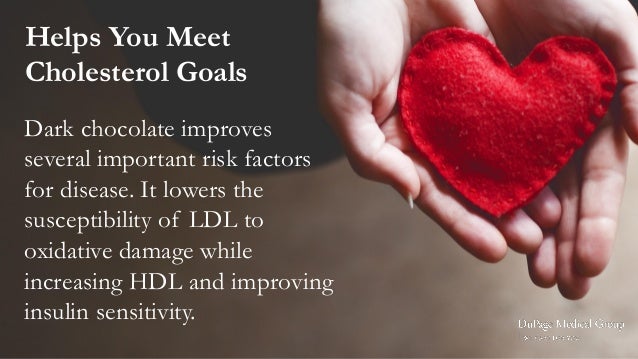
disease (CVD) and endothelial function. Some small scale trial evidence states that
eating chocolate results in the increase of high density lipoprotein (HDL)
cholesterol concentrations, which is the “good” cholesterol, as well as the
decrease of the low density lipoprotein (LDL). Unfortunately, prior to the
following study no large scale trials have been performed and the potential for
decreasing CVD by consuming chocolate was unknown.
The European Prospective Investigation
into Cancer (EPIC)-Norfolk cohort study observed 25,000 (99.6% white Caucasian)
men and women in the United Kingdom. Between 1993 and 1997 the chocolate
consumption of the observed individuals was recorded. In addition, a food
frequency questionnaire (FFQ), and information on chronic diseases such as
cancer, myocardial infarction, stroke and diabetes mellitus were obtained. The
follow up consisted of participants that were admitted to hospitals and were
identified by their National Health Service (NHS) number. The data was reported
in March 2008.
This primary data was combined with a
meta-analysis in 2014 and 2015 which evaluated the relation between chocolate
consumption and the risk of heart failure. Around 20,000 participants (53%
women) were included 1,101 of which developed heart failure during the follow
up. After these individuals adjusted their lifestyle and most importantly the
dietary factors, it revealed around 19% relative reduction in heart failure
incidence in the top (up to 100grams chocolate/day) compared to the bottom quintile
of chocolate consumption. However, these results are thought to be not very
reliable due to chances of comorbidities.
This meta-analysis included 5 more studies where
chocolate consumption was significantly related to lowering the risk of chronic
heart disease (CHD). In one of these studied no relation was found, but in
others, the risk of stroke, stroke mortality, cardiovascular events and CV
mortality showed a significant decrease with high chocolate consumption.
It is important to understand that in this type of a
large scale prospective population study, there are quite a few limitations and
room for unreliable findings. Even though the FFQ is a great method for quantifying
information in this type of study, there is always bias as well as
underreporting. This means that there could be a discrepancy between a person
who has a decreased level of CVD because of chocolate consumption and one who
has a high risk of CVD due to obesity and
inactivity. One of the factors in this
study has also shown that even with a slight decrease in CVD, high chocolate
consumption may increase body weight.
In conclusion, a large scale study like this requires
more data and further research in order to increase evidence reliability. The
percentage of the decrease in CVD due to chocolate consumption is pretty slim.
Needless to say, chocolate might not decrease the risk for individuals who
experience problems with obesity and diabetes. Nevertheless, even by a small
percent, chocolate will aid in the decrease of CVD and stroke in the majority
of individuals. Therefore, feel free to consume chocolate in moderation and
enjoy the beneficial effects!
Works Cited:
Kwok, C. S., Boekholdt, S. M., Lentjes, M. A., Loke,
Y. K., Luben, R. N., Yeong, J. K., ... & Khaw, K. T. (2015). Habitual
chocolate consumption and risk of cardiovascular disease among healthy men and
women. Heart,101(16), 1279-1287.

This article has brought up so many questions for me. I am left wondering things like, are the benefits of dark chocolate significant, is milk chocolate beneficial in any way, and is a decreased risk of heart disease the only benefit? I have heard so much about the negatives and positives of chocolate, but am left wondering which outweighs the other?
ReplyDeleteChocolate is probably one of my weaknesses. I can consume large amounts without feeling as if I need to run on a treadmill after. Chocolate always makes my day better. As Morgan stated above, I am also interested in whether or not there are various beneficial factors of chocolate besides a decrease risk in heart disease. Also, whether or not the various types of chocolates play a different role in these health benefits. I was also told that dark chocolate was good for your heart, is this true for other types as well?
ReplyDeleteI only know a few people that do not like chocolate and my opinion on them is they are crazy. After reading this I am going to tell them that if they eat chocolate there is a possibility of reducing risk to heart disease. The study said that people consuming 100 grams of chocolate was consumed each day saw the biggest reduction in heart disease. Did you find anything on whether or not more chocolate would aid even more or is 100 grams the max? Also, would different production methods of making chocolate effect the health benefits of the finished product?
ReplyDeleteI am addicted to chocolate! I am surprised that there is not enough research or data available because I know so many people who consume a lot of chocolate on daily basis. I always feel guilty after consuming lot of chocolate but after reading this blog, I am thinking that there might be some benefit to eating chocolate. I wonder if there is a specific amount that one should consume daily, did you come across specifics? Also, did this research look at specific type of chocolate which showed that chocolate reduces risk of heart disease?
ReplyDeleteChocolate is always great to consume in moderation. I'm curious to see if there are any studies concerning chocolates from different countries and comparing them with similar CVD studies. I'm not a huge chocolate fan, but I will have it every now and again and I'm glad to see that it is not 'harmful' based off of this article. I'm wondering if there is a maximum daily dose for dark chocolate or milk chocolate for adolescent children in order to avoid any ill effects of chocolate
ReplyDeleteI love dark chocolate, I love it so much I can eat baking chocolate bars without any added sugar! Some things that I have always wondered about eating really dark chocolate is the amount of fat that is in the chocolate. It seems that the darker the chocolate, the higher the fat. So although chocolate has many antioxidants that are said to have health benefits, like Morgan asked, do these outweigh one another?
ReplyDeleteChocolate is probably my favorite sweet! I find myself enjoying dark chocolate more and more over milk chocolate every day. I would love to see a study comparing different types of chocolate. I think it is great that something we as a society love so much can be beneficial towards our health. I just think we should be careful and aware of how much sugar we are consuming along with the chocolate.
ReplyDeleteI found this very interesting. I wonder which chocolate they used in these different studies. I have always heard that dark chocolate is the healthiest for you. It is reassuring to know not only does chocolate taste good, but in moderation it may have benefits to decreasing the risk of CVD. I wonder what chocolate is the best for you and if they have done other studies to see if it improves other areas of health and if it has any anti-angiogenesis properties which could lead to the decreased risk of cancer.
ReplyDeleteI would have to say when I am craving something, chocolate definitely has my strongest attraction. The sugar rush and the way the chocolate melts in your mouth is not explainable and is one of life's simplest pleasures. I was very surprised and happy to find out that this can help prevent CVD because it is one of the leading causes of death in the US. I also didn't know that there are antioxidants in chocolate as well. Pretty neat.
ReplyDeleteWeekly, I consume tons of chocolate to stratify my cravings. After reading this, it makes me wonder what are the benefits between the different types of chocolates. I never knew that chocolate can help to prevent CVD. However, if people start increasing their consumption of chocolate what would be in the negative implications of it and do they have a daily dose of chocolate that an individual should be consuming like they have for vitamins and supplements?
ReplyDeleteChocolate, I can remember the first time I had chocolate. When it melted in my mouth, it was so creamy and rich. So delicious. And now that I read that it may play a part in reducing the risk of heart disease, Im clearly going to be consuming more of it. I die a little inside when I hear somebody says that they dont like chocolate, one of God's greatest gifts. You dont gotta like it, you just gotta eat it to improve your health!
ReplyDeleteI really skeptical that chocolate, my favorite snack reduces the for cardiovascular disease because most people don't eat the dark chocolate they eat the milky with so much sugar chocolate. Also the study cited was not very convincing to me to strongly support the claim that it reduces CDV. I definitely agree with Alex that chocolate should be consumed in moderation. I would be interested in seeing further studies that compare dark chocolate with other types of chocolate to see of there is differences in health benefits. I think we have to be very careful with some research findings that suggest chocolate or other sweet cake-like foods reduces certain illness unless there is strong undeniable evidence as some people might consume too much of that food. We learned in class that too much of good thing can be bad for your health especially if it's tasty like chocolate.
ReplyDelete